Wednesday, April 03, 2013

Hoping for auroras, but not tonight

Monaghan Township, York County PA
After a mostly gloomy and overcast winter, the clear skies of this April are very welcome. Yesterday I wrote about how beautiful the morning light is, and last night I enjoyed the nighttime sky every bit as much. With skiing at Roundtop closed for the season and clear skies overhead, the stars are brilliant right now. I keep hoping to see northern lights—Alaska has been treated to some spectacular shows this year—but I’ve yet to see them this year. In fact it’s probably been ten years since I’ve seen a display here, at least in part because of cloudy skies on the few nights when I might have been able to see them.

Northern lights, or aurora borealis if you prefer, are often associated with both the spring and fall equinoxes. That’s because geomagnetic storms, or disturbances in the earth’s magnetic field, are strongest then. In addition to the spring and fall timing, several additional things during these times also signal when might be a good time to look for the lights.

1. Disrupted radio communications, such as with CB radios. These disruptions are often reported on local media, too. If you hear about those, that night and the next night are good times to check.

2. Solar flares, especially significant ones, are also good indicators of northern lights, typically the night after the flare is reported or about 20-30 hours after the flare

Green lights are the most common kind. Once I saw a big red “pom-pom” of northern lights here at the cabin. I clearly remember walking around the mountain in the early evening and having a sense that the air was crackling with electricity. I even saw a red light before the sky was fully dark that day.

Northern lights are seen in the northern sky, of course, here in the northern hemisphere. Usually, the glow from them is subtle this far south, but sometimes they move, which only makes the display more amazing. Cornell University created something called the “K-index” to describe how far south an aurora might travel based on geomagnetic activity. When the K factor gets to a 7, we have a good chance to see auroras in southern PA. You need a K factor of 9 to see auroras in the southern U.S. but a K factor of 2-3 is good enough if you happen to be in Alaska. Spaceweather.com is the site I use to check on the likelihood of auroras down here. They also have a good explanation of auroras and the k-index, too.

Right now the k-factor is low at a 1, with a 2 predicted for tomorrow. In fact the sun hasn’t produced a flare for nearly two weeks now. I’m hoping that means the next one, whenever it comes, will be strong enough to send auroras down here. But if not, well, the sky is still gorgeous right now and the stars shine like laserbeams in the black night.

Tuesday, April 02, 2013

Morning light

View from Carolyn's cabin, April 2, 2013

April has such a nice morning light.  The month falls on the opposite side of our yearly orbit of the sun from October, so perhaps the lovely light shouldn’t be so surprising. October, of course, has gorgeous leaf color to enhance the golden color created by the sun’s angle, so April is at a disadvantage there. And while October’s light seems prettiest to me in the late afternoon, in April I think the morning light is nicest.  

The forest here at Roundtop is still sleeping, at least on the outside.  I suspect that underneath the ground plants are stirring and getting ready to push up and will only need a little encouragement from the next warm day. That warm day isn’t due here yet for another day or two so. Until then the light itself is the star, with no competition from October’s golden leaves or the first shoots out of the ground.

That golden light is enough.  Enough to stop me in my tracks as I hurry to finish feeding the chickens. I stand, bucket in hand, and watch the shade deepen and brighten over the mountains to the west, a kind of alpenglow of the Appalachians, or appalachianglow. The rising sun strikes the upper reaches of the trees first, not yet penetrating down to earth where I stand. I watch the sun move slowly down the tree trunks. At this hour the sun’s travels are visible, though once the light reaches me on the ground, I lose much of that sense of how quickly it traverses across the sky. I must hurry. The chickens are waiting and I am already late.

Monday, April 01, 2013

Slow to spring


Near Uno, Carroll Township, York County PA

Spring is slow to arrive this year. It’s still too early to work the fields. The grass isn’t turning green yet either, despite Sunday’s brief rain shower. Robins have arrived in force, and the sky is filling with raptors migrating north again.
With the coming of a warming climate, I have gotten used to early springs and leaves opening before the warblers arrive. This year seems more like a pre-warming era normal spring, though of course that could change quickly. It’s rather nice to see the year ease into spring for once, instead of exploding into the season. And I can’t help but wonder what this weather will mean for the seasons ahead. The seasons are so unpredictable compared to how they were just 20-30 years ago, that a normal spring now seems abnormal. I try not to think too far ahead, but I’m not very good at that. Trying to extrapolate next month’s weather based on today’s trends is a fool’s habit I don’t seem able to break.
I find I would like to see some green sign of spring somewhere. For one thing, I’m tired of photographing brown woods and fields. A new and tender green shoot pushing through the forest floor would be a nice change. I know they will come. It’s just that this interregnum between snow and spring growth is taking a long time this year.

Friday, March 29, 2013

Spring

Goose and killdeer (and grass)
If I look quite closely, in just the right light, I can almost see grass starting to turn green. It’s still subtle and not very convincing, but the turn is beginning. Grass is quick to turn green. Even after weeks of dry weather in August, the lawns are green again within hours of a summer rainstorm. In spring, it perhaps takes a bit longer for that first, fresh hint of bright green to push its way through the browns of winter, but the change still happens quickly.

The temperature here has yet to break 50 degrees, though it edges a bit nearer to that mark every day. By tomorrow, when the clouds disappear and the sun is free to cast its warmth and brightness over the mountain, it will happen. The killdeer are already here, and the geese are searching for likely nesting spots. Yesterday, the phoebe returned to call again in the early morning. Spring is slowly pushing its way onto the forest around me, one little change at a time.

So, for me that means it’s time to put away the snowshoes, which I barely used this year. I will also start to put away the winter sweaters, too. I might keep one of them available for a bit yet. The weather might still turn cold for a day or three. It’s also time to clear the decks of winter detritus and get the front and the back ready for a lounge outdoors. Well, perhaps I can wait a bit on that last part.

From my perch on the mountain, enough signs of spring are about now that even a winter that arrived late but then never seemed to end is over. Time for me to come out of hibernation and get organized for the new season ahead.

Wednesday, March 27, 2013

Walking

Much of the snow that fell on Monday is going fast. Last night, under a gorgeous full moon, the forest was mostly snow-covered with large things like boulders and downed trees visible above the white blanket. This morning , the snow still more than half covers the woods, but it’s going fast.

A full moon with a bit of snow cover brightens the landscape to the point where I could almost read by moonlight. The extra light brings out the residents, too. Geese honked and scolded most of the night. A raccoon visited my birdfeeders but didn’t fiddle with the chicken pen. Deer stepped daintily through the snow, heads down, looking for bare ground that might produce something for them to eat. The night seemed nearly as busy as the day.

I took a walk shortly before dark last evening. The wind had calmed, and the day, while not warm, was comfortable enough without the biting wind. In winter, evening walks can only be done in full darkness, and now the same walk with enough light to see my surroundings was a pleasure. After dark, I notice sounds more than sights. Usually I stick to known paths, as even with a headlamp footing isn't easy to gauge. 

I can’t yet walk up on the ski slopes. They are either still snow-covered or ankle-deep in melting, muddy snow. So for now I confine my walks to the dirt roads and trails. It’s enough that I have daylight left to foray around the mountain. I travel less distance in daylight, paying more attention to the sights like some tourist, surprised by nearly everything I find. I wander from edge to edge of the old road, inspecting this or that or nothing much. It's the same route, but it sure seems a lot different. 

Tuesday, March 26, 2013

Gray and white

Tufted titmouse
 Snow certainly always brings birds to my feeders. And during snows the birds tend not to grab a seed and then disappear for hours. They arrive and stay for hours, hopping into a tree only long enough to eat their precious seed or wait for an opening before diving into the feeders again.

Yesterday’s snow was no exception, so I will show you two of the regular visitors to my feeders. The first is a tufted titmouse, a tiny little bird that grabs a seed and then lights on a nearby twig to eat it. When gone, it immediately returns to the feeders for a second seed and then repeats the process. I’ve always thought they must use nearly as many calories as they get from their single seed in their flights back and forth.

My second gray bird today is the dark-eyed junco, a winter-only resident from the north, who seems to view this part of the world the way people around here do a winter in Florida. Pennsylvania is south to this little bird.

Dark-eyed junco

Both the junco and the titmice are regular winter visitors to my feeders, and both are as common as chickens during winter. I still like to see them.
Yesterday I got about 6” of snow, a good amount here for this time of year. The snow is already melting. In fact, late yesterday afternoon the snow was melting and falling at the same time with the temperature at 33-34. I also found it odd to hear robins singing during the falling snow, with twittering juncos providing back-up vocals. I don’t get that one every day. Not only was the idea of snow and robins a rarity, so was the simultaneous presence of both the summer and the winter residents. March 2013 is proving to be unusual in several respects. It certainly makes me wonder what’s going to be ahead in April.

Monday, March 25, 2013

Spring

View out the back of my cabin
 It's probably been a good 10 years since I've had this much snow this late in the season.  Since I took this photo I've gotten another inch or so, and it's still snowing, if not as heavily as it was earlier.  At this point I have pretty close to 5 inches of snow. 

The feeder birds are fast emptying the feeders, and the chickens are unhappy--typical for a snowstorm. 

Road up to cabin

I caught the second raccoon--a vicious, large one that snarled and tried to attack from inside the live trap.  He was removed to the same spot as the one I caught the day before.  He was the ringleader of the raccoon gang.  I have since discovered I have a third raccoon, which I haven't yet tried to trap.  With the gang broken up, this one so far seems to be doing normal raccoon things, which I don't much mind. 

This one is still rolling the railroad ties from around the bottom of the chicken pen, but seems more interested in finding chicken pellets that find their way outside the pen than in digging or chewing its way inside the pen. So unless that changes, this one is no different than the myriad of other raccoons that inhabit and have shared my forest neighborhood. 

I'm willing to let it alone as long as it doesn't change that tune.

As you might expect from my photos, spring is definitely on hold.  The peepers have stopped peeping.  Spring greenery was next to nonexistant anyway, so no tender spring growth will be shocked or killed by this storm. And though late snows rarely last long, this one might hang around longer than most as the weather forecast doesn't include much of a warmup for the rest of this week.  I guess I'll just have to keep wearing my midwinter sweaters for a while longer yet.


Thursday, March 21, 2013

Trapped!

Raccoon
I got one!  Soon this raccoon will be released on a mountain far, far away from my little cabin. 

Last night I heard the trap snap and rattle around 1:30 a.m., and I got up to investigate. I was surprised to hear the trap go off, as I didn't have any bait in it. The night before I'd put cherry pie filling on the pressure plate, but the raccoons managed to eat the cherries off the plate without setting off the trap.

Last night my trapping plans were put on hold by an escaped Doodle the rooster and the stupid chicken. Unlike the other hens, the stupid chicken won't let me get near her, let alone pick her up, and she has a habit of not being able to figure out how to go in the door of the chicken pen. Doodle isn't tame either, plus he's something of a sneak.  Doodle scooted out in the morning while I was feeding the flock, and the stupid chicken scooted out yesterday afternoon as I was trying to lure Doodle back into the pen with blueberries.

So eventually, I got both chickens back into the pen, but at this point I was nearly late for an evening meeting. The meeting ran very long, and by the time I got home I decided not to take the time to bait the trap for the raccoons.  Apparently, raccoons prefer no bait in the trap.  More likely, I suspect some scent of cherries remained or perhaps a smidgeon on the plate itself and the investigation of where the cherries were led to this bandit's capture.

A second raccoon also haunts my chicken pen, and that one remained in the area even after this one was caught. I know that because the railroad ties I've placed against the bottom edge of the chicken pen were shifted or rolled when I got up this morning, and they were still in place after I discovered bandit #1 in the trap.

So progress has been made, and I'm hoping bandit #2 will soon be joining his friend elsewhere. I'm hoping that capture doesn't take long. I'm more than ready to return to sleeping through the night without being awakened by a raccoon attack.

Wednesday, March 20, 2013

No comet, no spring


Last night I went out in search of comet PanSTARSS again, to no avail. I went to the spot in this photograph, though after sunset, of course, to look for it. I think I was too early as the western sky was still pretty light. I wasn’t able to stay past 8 p.m., unfortunately. If I had to guess I’d say that 8:15-8:30 would be the right time to check the next time.


The snow of winter’s last day is already mostly gone, just a few snowballs or patches of it are left. The temperature shows no sign of warming up in honor of the new season yet. I was hoping to be able to put away the warmest of my midwinter sweaters. Instead, I’m still wearing them. I guess my garden plans will have to wait a while longer yet.

The cool weather seems to have halted spring migration, too. I haven’t heard any more phoebes or spring peepers. I did see four loons heading north the other day. I’m pretty sure they were common loons, though at the altitude they were flying, the identification isn’t certain. Red-throated loons are possible but not nearly as common, so calling these common loons is a pretty safe bet. Flying loons are the only kind I get to add to my “yard” list of species seen. I’m not sure even the biggest of the snowmaking ponds is large enough a runway for them to take off.

If spring birds are at a premium right now, the arrival of spring butterflies and moths are equally at a standstill. Usually, I could expect to see eastern blue butterflies or a few nondescript moths hovering around my porch light. Not yet, not this year. Winter started late this year and now it looks as through spring will too.

Tuesday, March 19, 2013

Last snow of winter


Even if the snow (and sleet and freezing rain and rain) I had yesterday turns out not to be the last snow of the season, it will be the last snow of winter.  Spring arrives tomorrow, so I feel rather confident of that prediction.
This snow is not, strictly speaking, an onion snow. In this area, an onion snow is technically a spring snow that arrives just as the first onion sprouts are pushing through the ground.  Onions are the earliest of the spring plantings.  The onion sets, as they are called, are planted as soon as the ground can be worked in the spring.  If you are planning onion seeds, you would have started them inside already, probably back in January.  Over the years and here where I live, the term onion snow has morphed a bit to mean the last snow of the season, whether or not the onions are planted.

In any event yesterday I had about three inches of snow before the precipitation went through nearly every other permutation of precipitation that is possible. This morning I noticed that the raccoons weren’t out around the chicken pen overnight, which means I got a good night’s sleep for once.  One small deer walked down the middle of my driveway and chewed on the juniper bush for a while. The juncos arrived to check out my birdfeeders. They found them empty, as they have been for nearly two weeks before the raccoons began their nightly attacks. I was impressed that the juncos remembered I used to have bird seed for them.  I took pity and put out another scoop of seed. I hope that gesture doesn’t come back to haunt me.

I enjoyed watching, too, the dismay of the white-breasted nuthatch.  Normally, that one feeds from a tube feeder and I haven’t replaced that one because of the raccoons. The poor nuthatch could see the food in the platform feeder, but kept looking for the tube feeder and didn’t seem able or willing to attempt eating somewhere other than the tube.

The mountain is especially quiet again. Skiing closed Sunday for the season.  The skiing action is never noisy, but I do get used to the distant sound of kids calling to each other or whooping as they head down the hill. The slope lights are off too, now, so when you factor in the overcast and foggy sky, it is quite dark without even the reflected light from the slopes.  I enjoy the change, but it will take another day or so for the current reality to feel normal again. If the clouds ever clear, perhaps I’ll even get to view that comet.

Monday, March 18, 2013

Dull

Pileated woodpecker

Winter didn’t have much of a bite this year, but that hasn’t kept it from refusing to give up the stage. This weekend and today I’ve had a mix of snow, sleet and freezing rain.  On Saturday I saw robins in the snow, though they didn’t appear unduly deterred by the weather.

The days never got very bright, and the gloomy skies that characterized so much of this past winter continued.  I’ve been trying to see this Pan-STARRS comet for days now, foiled each time by poor weather. Northern areas have had good aurora borealis displays, too, and if any of them reached this far south, I would never know it.

The landscape is dull and brown. Any thought the tender shoots had of pushing through the ground is on hold until the weather improves, which doesn’t look as though it will happen this week.  So is March 2013 a lamb or a lion?  So far it’s neither. Perhaps it’s more of a housecat or a full grown sheep .  Not a lamb and not a lion and more than a little dull.

My photo today is of a distant pileated woodpecker that was working furiously on that stump.  He didn't stay around long enough for me to switch to my long lens. Pity.

Friday, March 15, 2013

Just another day in March


March is a month of wild variations in weather here on Roundtop and around Harrisburg. Even before climate change, historical March temperature averages often varied 10-12 degrees from year to year. In 1945, for example, the average temperature that March was 51 degrees and the year before in 1944, the average was 37 degrees. So no matter what this March brings, it won’t tell much about the area’s climate, let alone be an indicator for more widespread changes.


One day March brings snow, the next day comes close to being t-shirt weather. The closest thing to a constant in March is the breeze, which rarely subsides. If not exactly roaring like a lion, it’s still strong enough to make whatever the temperature-of-the-day is feel about 10 degrees colder.

I do know that it’s cold enough to silence the spring peepers at the moment. And the one phoebe that announced its presence a few days ago hasn’t reappeared either. It has probably moved north and is not going to be one of the ones that summers here.

The landscape still looks barren and cold. It doesn’t take many warm days for grass to turn green, and I haven’t yet seen any sign of that yet. At night I still get occasional flurries, even on days when midday verges on being warm. In other words, it’s a typical March here so far.

Wednesday, March 13, 2013

A walk along Beaver Creek


Late note: The first eastern phoebe sang outside my bedroom winter this morning. A few spring peepers chorused last evening, too. Spring is here.

This past Sunday was a gorgeous day throughout much of the eastern U.S. Temperatures were warm and the winds calm. It’s not uncommon to get a day or two like that in March, but it sure feels as though we don’t get them very often on a weekend day when they can be enjoyed to the fullest. This one was not to be wasted.

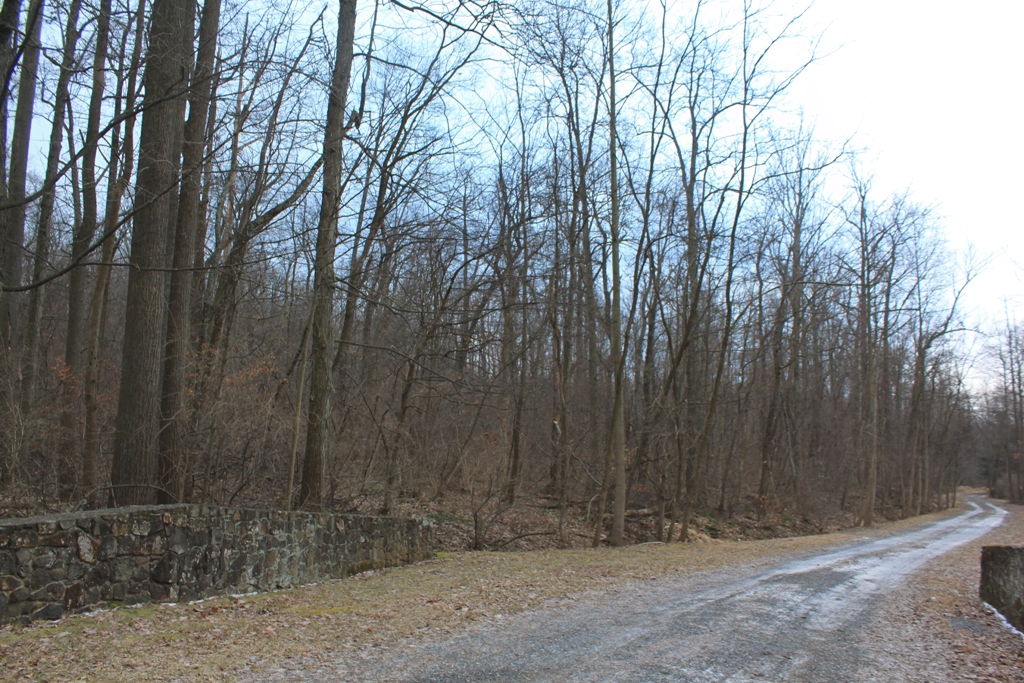
So Sunday Baby Dog and I took a walk down the valley between Flat Hill and Roundtop Mtn. I was eager to get out and see how Beaver Creek was flowing and see how the valley looked after winter. Would I see any signs of spring?

The warm weather made the going muddy, but we proceeded down the mountain slowly. Or at least I did. Baby Dog would have bounded down at top speed if I’d let her. The valley was still brown with winter, and though I walked the length of the valley, I didn’t see any spring growth, not even the ubiquitous skunk cabbage.

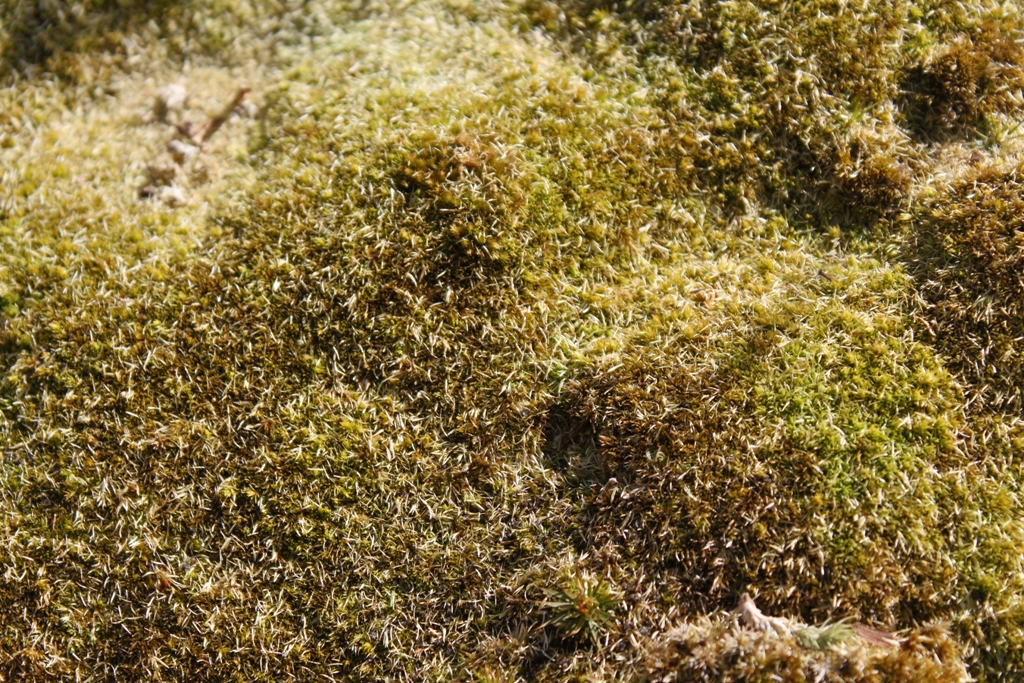
Even the mosses still had a dull cast, though I did find one patch of it that was bright green. Beaver Creek flowed well, if not yet over its banks. Spring rains haven’t appeared here yet, and the snow I had this past winter wasn’t enough to create a torrent. In a way that was good news for my walk. The valley is often quite muddy in spring, and if this year is a normal one, the valley may become close to impassible in April.

Mosses were much in evidence, though I find them difficult to identify. Good sources are either expensive, non-existent or require a microscope and more expertise than I have. However, a few of them seem reasonable to attempt. The first is an atrichum moss; its reddish color is something of a giveaway. The reddish shade occurs when the moss curls up to protect itself from cold or drought. You can see a few areas where the moss is already uncurled.

The last photo is an acrocarp-type moss, though I don’t know the exact name. It’s essentially a “sheet” moss that covers a big area.

 It didn’t take but a few days for the warm Sunday to be the harbinger of spring sights and sounds. When the phoebe sings and the peepers peep, the arrival of spring is a foregone conclusion.

Tuesday, March 12, 2013

Raccoons 1, Chickens -1

Beaver Creek pond
Coyote urine doesn’t work as a raccoon deterrent—at least not here on Roundtop where the raccoons apparently don’t see enough coyotes to have developed the notion of what coyote urine means.

On Friday night I lost a chicken to a raccoon or raccoons. A raccoon ripped the roof/door off of my chicken pen around midnight, and even though I was out there in seconds the chicken was already gone. Since then I have nailed shut the roof door. I have no idea how I will clean the pen now, but I’ll worry about that later. I am blocking the front pen door with two large railroad ties. The raccoons can move those two ties about an inch but so far that’s all. I’ve entirely removed my bird feeders and cleaned up anything that the raccoons haven’t yet found around those feeders. I’ve duct-taped shut another cleaning entry to the chicken pen.

And, I’ve been spending the evenings in my car with a BB gun waiting to sting the butt of the next raccoon that crosses my path.

On Saturday night I did get a shot at the raccoon. It’s a big one. I don’t know if I hit it, though it did make a sound when I shot. It might have been surprised by the sound of the BB gun, though. My nephew volunteered to lead a posse of buddies with their .22 rifles to put an end to the pests. I’m not against that, but the raccoon has not reappeared since Saturday night, and I’m not sure the posse wants to spend night after night sitting in my driveway waiting for a raccoon to reappear. I’m going to give the BB gun stakeout a week before I deputize my nephew.

On Sunday, Baby Dog and I headed down in to the valley to see how Beaver Creek was doing. We had a good early spring walk, and I’ll have more about that tomorrow.

Monday, March 11, 2013

Sunday the geese flew north


Canada geese heading north and very high (taken with 300mm lens)

Sunday the geese flew north. And the tundra swans. By the thousands. Maybe by the tens of thousands.

It started on Saturday evening not long after dark, with the tundra swans. I heard that familiar “whoo-whoo” sound. And then, directly over the cabin where I have a bit of open sky, I saw them. A snowy white vee against the ebony sky, heading north. That flock was a big one, about 200 swans. If there’s anything more beautiful than seeing swans flying north at night, I can’t think what that might be.

And that was just the beginning. After that came the first of Canada goose flocks. I heard many more flocks than I saw, and I saw quite a few, even with the forest trees hiding many from my view. I heard them while I was on raccoon patrol—more about that tomorrow. The sound of the flocks went on for hours, perhaps all night. Certainly every time I was outside I never had to wait more than a few minutes before I heard the sound of another flock.

During the day on Sunday, even more flocks passed overhead. Mostly Canada geese, with an occasional flock of swans joining in. Sunday evening, I heard and then saw my first flock of snow geese. To my ear their honking is a bit less harsh than that of the Canada geese. Again, the sound went on for hours, well into the late night, until I was forced to bed.

Spring is here. It arrived with the geese and the swans heading north.

Friday, March 08, 2013

I hate springing forward


Don’t get me wrong. I like the longer sunlight in the evenings as much as the next person. What I don’t like are those first few wake-up alarms when my body screams at me, “WHY are we getting up at 4:30 a.m.?”


This morning on my nearly dark walk at 6 a.m. with Baby Dog, I kept thinking, “this is going to be 7 a.m. in a couple of days.” I’m going to have to wake the chickens up to feed them in the mornings. Again. Just as I’m starting to notice the barest hint of dawn in the east, I will be getting up an hour earlier and reverting to walks in utter darkness.

Arizona and Hawaii don’t change to daylight saving time. Neither do Guam, Puerto Rico or the U.S. Virgin Islands. Lots of countries don’t change either, though most of them are around the equator where the hours of daylight don’t vary much. At latest count, 159 countries do not observe the annual time flip-flop and 82 countries do.

Hawaii falls into the tropical camp of non-changers. Arizona, apparently, doesn’t like it because it’s so hot there that people don’t do much outside until after dark, and the last thing they want is more daylight in the evenings.

The time change only started in WWI, so it’s hardly a tradition of very long standing. The original idea was that the switch saved energy, but from what I’ve heard that idea is controversial and the savings are something like a mere 1% of electrical consumption. There’s little argument about people preferring longer daylight in the evenings, though.

Still, I am not looking forward to Monday morning. Or Tuesday. And probably not Wednesday either.

Thursday, March 07, 2013

Disappearing snow (and coyote urine)

Roundtop this morning after yesterday's snow
Yesterday’s snow has already melted quite a bit. In fact, if I’d know how fast it was going to melt, I wouldn’t have spent so much time and effort to shovel it. This morning the cloud cover is lifting and a bit of bright blue sky is visible, a sight that’s enormously welcome. I’ve grown tired of overcast skies this winter. Skies here in winter are historically a lot more sunny than cloudy, and this year’s gloom only makes the lack of snow and winter temperatures feel even worse.
This morning looks a lot more like a typical winter scene here, even if the snow is melting and the temperature edging towards spring. For the moment I will enjoy the snow—that’s about all the longer it will last. Yesterday I got almost 5 inches. Today I have something less than 2 inches already. By tonight I expect the snow cover will already be spotty where sunlight struck it.

I have been forced to buy coyote urine to try and deter the raccoons that are pillaging around my cabin. (Thanks to Marcus Schneck, the outdoor writer for the Patriot News for suggesting it). So far it seems to be working, though with the snow melting, I will need to reapply it around my chicken pen pretty often. I’ve used it for two nights now, and so far I haven’t been awakened by raccoons or Baby Dog’s frantic barking at the raccoons. I just hope the bandits don’t get used to the smell and start ignoring it.

Oddly, the neither the household dogs nor the cats seem to mind it. The cats are actually interested in the smell. One somehow climbed atop my jelly cupboard where I had placed it to check it out. The dogs pretty much ignore it, if they even notice it. So, I find it a bit odd that it’s a raccoon deterrent. But I’m not complaining, as long as it works.

Wednesday, March 06, 2013

All I got for winter...


...was one little snowstorm.  And even this one might be over, though it doesn't look that way on radar. 

When I went outside the cabin to shovel and take these photos, a turkey vulture glided high overhead, and a killdeer screeched from nearby.  Neither of those two birds are known for liking snow.  They must think the storm is over.  And given that this is March already, it is becoming more unlikely that I will see another plowable snow this season.

The birds are happily emptying my feeders.  Two carolina wrens, two white-breasted nuthatch, a blue jay, three titmice, three chickadees, two downy woodpeckers, a red-bellied woodpecker and an ever-changing assortment of juncos are all acting as though the food is free.  Well, to them it is. 

The snow is heavy and wet, a real snowman-making kind of snow.  For some reason I was expecting powder, not this heavy stuff.  That really slows down the shoveling. I'm taking a lot of breaks.


Monday, March 04, 2013

Snow, maybe, and raccoons, yes

Snow flurries were a constant presence this weekend at Roundtop. Sometimes the flurries threatened to turn into a squall, but most of the time they drifted like ash from a distant fire, one or two at a time and never amounting to much.

But today it appears I might get to see an actual snowstorm this year, though when storms come in March the snow never lasts. This storm, should it appear as forecast, does not look to be an exception to that rule. At the moment I’m cautiously optimistic, while trying not to get too excited. The forecasters are predicting anything from 0-10 inches of snow, and even they are complaining about the lack of clarity in their forecasts.

I’m withholding my enthusiasm until the feeder birds start to mob my feeders. If that happens, I’ll know a storm is on its way.

At the cabin I’ve been dealing with the nightly prowls of two raccoons, one smaller than the other. They appear twice a night, the first time early in the evening and the last time around 4:30 a.m. I figure I get them heading out for their night of pillaging and again on their return from pirating. I have taken to going to bed earlier simply so that when I’m awakened by the hysterical barking of Baby Dog at 4:30 a.m. I have already gotten a decent night’s sleep so it won’t matter if I can’t fall back asleep again.

Last night I had to chase the smaller one off my front deck. It had retreated to a corner of the railing cap and was trying to make a stand there, but when I came out and waved my arms it suddenly decided that climbing down the deck post wasn’t impossible, after all.

For a couple of nights now they have attempted to breach the chicken pen, to no avail, though they have succeeded in digging a small hole at one spot so they can reach under the pen and touch the chicken feeder—not that the girls leave much food by nightfall. This morning I placed a heavy piece of railroad tie scavenged from Roundtop’s dump over the spot. The tie is pretty heavy, so I’m hoping they can’t move it. The chickens themselves are up in their coop at that hour and seem secure in there. Half the time the raccoons don’t even wake the chickens, and it doesn’t take much for the girls to set up a squawk.

I am shortly going to visit a local sporting goods store to invest in some coyote urine, a remedy Marcus Schneck, the outdoor writer for Harrisburg’s newspaper, suggested to me this morning. He claims a few drops around the perimeter of the cabin should do the trick. I’ll let you know how it works.

Friday, March 01, 2013

March

It has already begun, this march to spring. I have heard the first killdeer. It squealed at Baby Dog and me this morning as we walked across the stone parking lot at Roundtop. The birds nest among the stones, and by April tiny balls of miniature killdeer fluff will be scurrying, almost invisible, around the lot. It is too soon, today, for nesting to begin just yet, but I think the birds are beginning to stake out their territory.
A friend is already reporting he is sick of the abbreviation FOY, which in electronic birding lingo means first of year. Birders reporting a new species seen in the current year frequently report the species is a FOY for them. March is the time when summer species begin to arrive. The killdeer was a FOY for me. I’m pretty sure I’ve already heard a FOY red-winged blackbird, but when I stopped to listen the call didn’t repeat so I didn’t record it.

This morning the light has improved with the clearing sky. The gloomy overcast is lifting. This winter has seen far too many low clouds and overcast skies for my liking. In years past I would have said they were untypical of winter days in this area, but the past several years have seen many like them, so perhaps gloomy overcast winter skies are no longer untypical. I hope these are only a momentary trend and not yet another sign of climate change.

February is over already, and though the last few days of the month were above normal in temperature, the month still finished out a full degree below average—below the average of the last 30 years, that is. If you discount the official “normal” espoused by weathermen and look at February temperatures over a longer time, 2013 is slightly above normal. The 1961-1999 average for February was 31 degrees, and adding in all the records I could find for Harrisburg, which are consistent back into the 1930’s before the data I found started missing some years, the average for February should be about 30.94. So this year’s average of 32 degrees is still above all that, if below the official “normal” of 33.


Wednesday, February 27, 2013

Gloom


Don’t take my word for the gloom. Here is the proof. Sometimes fog is attractive and makes for interesting photographs but not always. And the mountain right now is in that “not always” mode as far as I’m concerned. It’s too foggy and too gloomy. Last night and this morning rain also pummeled the forest to the point where I couldn’t have the camera out for even a few seconds.

Winter appears to be essentially over, though I can’t say that it feels much like spring yet either. As winters go, this one wasn’t worth writing home about. True, winter did put in a brief appearance here, unlike last year when it was entirely missing in action . Winter started late, not getting underway in much of a real sense until mid-January. The first two weeks of February brought actual winter temperatures, if precious little snow. But now? The temperatures are March-like and the rain presages April showers. So is this what winters will be like now? Perhaps four weeks of actual winter instead of three months of cold weather?

It’s a sad state of affairs, that’s all I can say.

I can only hope that four weeks of cold weather was enough to damp down the mosquitos and ticks that will arrive with summer temperatures. I know the stink bugs are still around. I find them in odd places around the cabin—behind a painting on the wall, between the pages of a book, in a desk drawer.

In the meantime, I dodge puddles and clean mud off the dogs’ feet. I should probably store the snowshoes again someplace where I don’t need to see them for the next 320 days (at this rate of winter). My sweaters already seem too warm. It’s a depressing time, to be sure. I’m as gloomy as the forest looks today.

Monday, February 25, 2013

Potpourri

Mist rising on the Yellow Breeches Creek, Monaghan Township, York County, Pennsylvania
Although the nights are still frosty, spring can’t be far away. In addition to the dead skunk I saw at the end of last week, I can now add groundhog to my 2013 list. They are up and out of their burrows, whether Phil saw his shadow or not on Groundhog Day.

The countryside is not, to my eye, very attractive at the moment. November is just as brown but has an advantage of not yet having been beaten down by winter snow and rain. Everywhere I look the landscape seems twisted and dull, dull, dull. It’s still too early for even the moss to turn green. Skunk cabbage isn’t up yet here, either, though I’m sure that’s getting close.

Sunday was warm and sunny here, and that brought out the first of the migrating vultures, both turkey and black vultures. I saw several groups of turkey vultures and one nice-sized group of black vultures enjoying the thermals the sunshine created. Likely the weather was nice enough to move a few raptors, as well, though I didn’t see any. The first of the spring hawkwatches are already opening, but even they aren’t seeing much other than vultures at the moment.

The landscape feels very “in-between” right now. Winter seems to be fading, but spring isn’t yet here. Snow geese are gathering at Middle Creek Wildlife Area in Kleinfeltersville, Lancaster County, but they don’t stay very long. I likely won’t get there to see them this year, but if you’re nearby don’t miss it. If you’ve never seen tens of thousands of snow geese at once, there is the place. Their arrival is one of the wonders of the natural world, and sound of that many waterfowl is amazing. Best viewing is in the late afternoon until darkness falls. The geese spend the days feasting in the surrounding fields and return to the lake as evening falls. At the moment, their numbers are estimated at 40,000. Some 3000+ tundra swans are also at the site, as well as several thousand Canada geese.

Friday, February 22, 2013

No photo today, but...

Instead of a photo, I'm attaching a link to an article about the Great Backyard Bird Count that featured a video interview with me.  Marcus Scneck, the outdoor writer for the Harrisburg Patriot News, came out to the cabin last Saturday as part of a couple of pieces he did about the backyard count. Pennsylvania ended up with the second highest number of birds recorded for the count.  My total on a cold and windy day sure didn't help that total very much.

 http://blog.pennlive.com/wildaboutpa/2013/02/pennsylvania_submits_second_hi.html

Thursday, February 21, 2013

Deer trail in winter


Usually deer trails are not as well-worn or as visible as the one in today’s photo. Frequently the trails peter out within a few feet or disappear into a tangle that deer but not people can navigate. This one is the exception.


With snow gone, at least for the next 24 hours, the path deer take through the woods on their way to an open field stands out. In summer, undergrowth will make this trail as difficult to follow as most of them, and the only reason the path is so visible now is that a day or so of above-freezing temperatures allowed deer hooves to leave a muddy trace of their presence.

The woods are nearly uniformly brown right now. Even the moss on the stones of the old fence has taken on a faded look. Mosses are one of the earliest to brighten up in the spring, though, so when that happens I’ll know spring is truly upon me.

For now, winter’s grip is pretty tight, with snow and freezing rain expected tomorrow and over the weekend. In fact, February is shaping up as colder than normal by a few degrees. That’s the first month that’s been below normal for some time. Still, “normal” is only taken from the average of February temperatures for the past 30 years. When I look at February averages going back to World War II (and some even earlier dates), this year’s February is pretty average and not actually below normal. At least it’s not another month of warmer weather. I suppose I should be glad of that, however small a thing it is.

Wednesday, February 20, 2013

Not much walking

Snow flurries over Roundtop Mountain
Although spring is knocking at the door, winter is putting up a fight this year. I awoke to frigid winds and near-blinding snow squalls this morning, a drastic change from the day before. I avoid much walking on days when the wind makes my face go numb, and this morning fell into that category. Even the chickens were slow to descend off the roost this morning. They wanted no parts of that either.

I also had the excuse of ice created by yesterday afternoon’s light snow and rain. The ground was slippery and hard but not to the point where I could comfortably wear my Yak-Trax either. So I didn’t take much of a walk this morning and for once the dogs didn’t seem to mind. They were just as eager to return to the warmth of the cabin as I was.

Some days the outdoors just looks better from the indoors, and this was one of those days.

Tuesday, February 19, 2013

Unfortunate signs of spring


Even though it’s snowing as I type, I’m afraid that it looks as though spring is approaching. This morning I saw several signs of the season’s change.
1. Several hundred common grackles invaded the tallest trees just above my cabin this morning and made an enormous amount of noise. To my ear they sounded like a very rusty piece of large machinery squeaking on the mountain. In fact, for a second I thought one of the snow grooming machines was the cause of the noise. To be fair, the birds did not seem to be traveling from south to north, but rather from west to east. Since the storm that is now bringing snow to the mountain was approaching from that direction at the time I saw them, it’s possible the birds were coming from some large field and simply moving ahead of the storm. At least that’s what I told myself before I saw...

2. A group of 7-8 black vultures circling over the orchard as I headed out to work. Black vultures are the southern cousins of the turkey vulture and are a recent invader from those climes, heading north on the wings of climate change over the last 20 years or so. While it is common to see the first turkey vulture of a new year on any winter day with a very slight warming trend, black vultures are likely to wait for an actual thaw before making their first appearance in my area. Vultures can travel good distances in a day, and frequently move south to north and back again several times as weather dictates. So seeing them today doesn’t mean they are here to stay, though I see them but rarely in January. Their arrival in February usually means spring isn’t far behind. But, these were circling just ahead of the impending storm, so I could possibly write off the sighting as storm-related, except that I saw a...

3. Dead skunk in the middle of the road. Folks, this one is the dealbreaker. The birds might be written off as traveling ahead of the storm, but the skunks are out and about, and there’s no denying what that means. Spring isn’t far away. Unfortunately.

Thursday, February 14, 2013

Snow-covered but barely

E. Mt Airy Rd., Monaghan Township, York County PA
Last night saw the cabin covered in a pretty little snow. For once, I had more than dusting, if still not enough to ski or snowshoe. Snow stuck to every surface, too powdery for snowmen. The first breath of breeze will downgrade the prettiness, revealing what was this morning a vast expanse of white.
 
Sunrise over a snowy pond
 Dog tries to eat the snow. Baby Dog runs like a crazy dog, burying her nose as she goes like a canine snow plow. The chickens are not amused and step daintily from their coop, raising their feet high with each step. Deer have been to the juniper bush again. Their tracks tell me they arrived after the snow stopped and after a trip to the pond for a drink of water.

Snowy cabin at night
A pretty little snow qualifies as a short step up from a dusting, but not by much in my book. I ended with a tad over 2 inches of snow. The snow is a bit like a china doll—pretty to look at but not much for playing with .

Wednesday, February 13, 2013

Sunset walk with geese


With the days growing longer, my evening walks with Dog or Baby Dog are no longer restricted to well-worn paths or roads. It’s not yet light enough for me to wander through the woods in the evening—even with a headlamp the footing is too chancy and difficult to see. But in an open field, the last light of the day lingers long enough that a walk across doesn’t feel like tightrope walking.


So Baby Dog and I took advantage of good weather and the last remaining rays of daylight to visit one of Roundtop’s pond. We saw 58 Canada geese. Or, I should say, I saw 58 geese. Baby Dog was much more interested in nosing through the grassy stubble than in watching geese. Even when they took flight and skittered from the open water to the ice, honking all the way, Baby Dog was unimpressed.

I was happy to see them. Except for the old pair who has already taken up residence along “their” pond, I haven’t seen the local group for a while. And the local group has added several to their flock since they were here last. Sunset already held a few of the clouds that will bring snow to the mountain later today. I was glad simply to be outside, even if in failing light. At least it was light if only for a few minutes.

Tuesday, February 12, 2013

159 (years) and counting


I sat at the kitchen table this morning, as I do most mornings, reading the words of Henry David Thoreau. I am enamored of his journals even more so than I am his works like Walden. I like to follow along with Henry’s entries, reading a day at a time, measuring his words against what I see outside my own door. This morning: “...you hear the lisping tinkle of chickadees from time to time and the unrelenting cold-steel scream of a jay, unmelted, that never flows into a song, a sort of wintry trumpet, screaming cold...” He wrote this on February 12, 1854.


I can’t say that I ever thought of chickadees as lisping before, but I love the idea. The blue jays are perfectly captured, even as three zoom in to my own feeders, descending like fighter jets onto an aircraft carrier, scattering the chickadees (and everything else) as they screech to a halt on the feeder’s platform.

This morning the fog of yesterday is lifting. The sky is still overcast but threatening to clear. That won’t last even if the sun succeeds. Tomorrow, a bit of snow is predicted, possibly even a tad more than another dusting. Not enough snow for snowshoeing, but possibly enough for cross-country skiing, if I don’t mind scratching the bottoms of my skis a bit.

I will be glad of the snow. I noticed this morning how dark the woods were on my early morning walk with Dog and Baby Dog. For the first time in weeks I needed a headlamp again. Since early January snow has illuminated my path in the pre-dawn hour, and this morning I had only darkness.

Monday, February 11, 2013

Disruptions


Roundtop Mtn. didn’t see much of the blizzard nor’easter that pounded New England. The storm did not bring the ice that was predicted, and the snowfall amounted to little more than another dusting of snow. Strong winds followed in the storm’s wake but produced no damage.


Yesterday, before the snow was obliterated by some freezing rain that fell overnight, Baby Dog and I made a big circle around the cabin environs. I was tempted to walk down the mountain to venture along the creek but decided against it. The way down looked pretty slippery, and I was not wearing my Yak-Trax at the time. So Baby Dog sniffed at every leaf and I stared at tracks of deer and raccoon, relieved not to see any fox tracks. I haven’t heard any foxes barking for a while either. Foxes come and foxes go, such is the way of them around the cabin. For the moment, the chickens are enjoying their freedom.

I’m glad Baby Dog got a good walk yesterday, as freezing rain this morning kept our excursions to a minimum. Even with Yak-Trax I wasn’t inclined to venture far. The accompanying fog and general gloom didn’t encourage me to walk further either. Add in the lethargy naturally produced on Monday mornings by rising earlier than I do on the weekends, and shortening the morning walk wasn’t a difficult call at all.

I should add that my lethargy might also be due to a lack of sleep produced by Baby Dog’s frantic barking, multiple times throughout the night. Twice she was outraged by a foraging raccoon, once by 3 deer calmly walking right next to the cabin and once by something I never saw, though it might have been a helicopter noisily flying by at roughly the same time. It doesn’t take much for Baby Dog to sound an alarm. Some nights are worse than others, and this was one of “those.”

Friday, February 08, 2013

Snow over forest


The big nor’easter that will pound New England later today is apparently not going to make an appearance over my cabin.  Still, the local animals seem to think something is up and are acting accordingly.

Last evening nearly 20 deer were feeding in the grassy field across from Roundtop’s north parking lot. This morning, Baby Dog and I scattered deer throughout our walk.  One raced from the open water of the snowmaking pond up the slope of Drummer Boy, staying just ahead of the approaching snow groomer, which is a large tracked vehicle not unlike a bulldozer on tank treads.  Two more ran ahead of us a bit later in the walk, clattering first up the paved road, then through the stone parking lot, pausing only to stare or glare at us once they reached the edge of the forest.

We see deer on our morning walks fairly regularly, but to see so many and to have them so near is not typical.  The deer gave every sign they were filling up their bellies while they could.  Anyone who feeds birds and sees them in a “feeding frenzy” before and during a storm will understand.  Deer do the same thing.
What I find interesting about the animals’ activity is that they are acting this way even though this storm will largely miss my area.  The forecasters are saying this area is in a “dry slot” between the two storm systems.  Apparently tonight I might see an inch or so on the back side of the big storm, but nothing more. So, what’s going on here?  Are the forecasts wrong about the storm missing the area?  Are the deer (and presumably the birds, too) wrong to jump into feeding frenzy mode?

It’s a bit too soon to know, at this hour, if either the forecast or the heavily feeding forest fauna is off the mark.  I suspect the animals can sense the storm as it is brushing the southern edge of my county at the moment.  They don’t have built in radar, so they probably can’t tell that the storm will likely sweep by without causing much difficulty here.  They can feel its approach, sense its nearness and are acting accordingly.  Or perhaps they know something the forecasters can’t predict.  Perhaps I should be more worried than I am.

Wednesday, February 06, 2013

The earliest birds


The Carolina wren first sang at 6:14 a.m. this morning. I checked to be sure of the time. At that hour no hint of dawn yet colors the eastern horizon. With the snow cover, even just the dusting, the forest is not dark at night. The white snow brightens the woods all night long, making a headlamp largely unnecessary at any hour. In other words, 6:14 a.m. is no lighter or darker than 2 a.m., and in fact, if the wren sings at 6:14, it might just as well sing at 2 a.m.
Still, despite the lack of visual cues, 6:14 a.m. was the first time this wren decided it was morning and proceeded to sing. I used to think northern cardinals were the earliest morning singers in winter, but the Carolina wren has altered that view. It makes me wonder, though, just how a wren knows it is morning when actual daylight is still a good hour off, and the hour it chooses to begin to sing looks the same as 2 a.m.

Doodle, my rooster, for example, doesn’t crow until there’s the barest hint of morning color in the sky. Unless, that is, I turn on my bedroom light in the middle of the night. Then he seems to think morning has come, and I’m likely to hear him crow a few times before I turn my light off again.

Birds are supposed to be sensitive to the so-called false dawn that is not visible to human eyes. False dawn begins about an hour before the actual sunrise. All I can say is that if the Carolina wren is sensing a false dawn, it is remarkably sensitive. This morning the sky was overcast and even foggy, so even the faint false dawn was shrouded by that. Still, the wren sang heartily, as it does every morning. Perhaps it is just hungry, its stomach telling it that food is needed. Mine does the same thing, sometimes.

Tuesday, February 05, 2013

Another day, another dusting

Another day, another dusting of snow. How many dustings does it take to make an inch? I don’t know, though I do know it’s more dustings than I’ve had so far. I’ve had a dusting of snow every day for the past five days now, and I doubt there’s more than half an inch of snow on the ground.

I do rather like these little snows. Every morning the snow is fresh again, a thin carpet of white covering the forest. Oh, these little snows can’t compare to an actual snow, the kind of snow where I could go snowshoeing or cross-country skiing, but they are far more preferable to no snow at all.

By evening the dogs and I have tracked up the driveway and the lane. Then each morning I see who and what has been padding around the cabin while we are sleeping. The deer return to the juniper bush for a few bites, and their chomping is starting to result in a visibly chomped bush. I see little cat feet and raccoon tracks. I see lots of small bird tracks, though I can’t really tell a chickadee track from a junco track. To me they are all just little bird tracks.

In the early afternoon, before the snow is too much tracked up, I can see what the chickens have been up to and where. Doodle, my rooster, follows One-Eye, my old chicken, wherever she goes. She doesn’t much like snow and can usually be found under the cabin where the snow doesn’t lurk. Sometimes Doodle, who has huge feet by the way, travels over to the new chickens’ pen and parades around it, no doubt hoping to find a way in.

Even these little snows help to make the season feel like winter. The temperatures at the moment are actually below normal, though not aggressively or uncomfortably so. The days don’t break freezing, though the afternoons near that mark, and the nights settle down into the teens. The wind has finally eased up, and being outside is enjoyable again.

After last year’s non-winter, a season that approaches normal is welcome, at least by me.

Monday, February 04, 2013

Snowy weekend

Snow fell all weekend here on Roundtop Mountain, though except for a few hours on Saturday evening, the snow was simply flurries. After an entire weekend of snow less than an inch has fallen. Every time I went outside or looked out the snow was different—sometimes it was big flakes, sometimes small, sometimes it was quite a flurry, sometimes only a flake or two was falling. Saturday evening the flurries increased to a snow squall. Even though there isn’t much of it, this snow was difficult to drive in, and many accidents resulted. This snow extremely powdery and so quite slippery since there’s little traction for tires or feet. I fell twice on hidden ice, fortunately to no injury.
I love the snow and so spent most of the weekend at and around the cabin. I knew there would be less snow down in the valley and around the towns, so I decided not to go there after Friday evening. I stayed by the cabin, never venturing anyplace where I might see bare ground.
And so I was surrounded by snow all weekend, even though I don’t have enough on the ground for snowshoeing or cross-country skiing.  There's just enough snow to track the chickens from the front of the cabin to rear, to notice that the deer were back chomping on the juniper bush again, and for the entire landscape to be white. The western mountain was snow covered. The forest behind my cabin was snow covered. The driveway to the cabin stayed snow-covered. It was lovely.

Tonight, perhaps even more snow will fall, though still just an inch or so. Winter is finally here and acting like a normal winter this week. It couldn’t be any lovelier. Well, maybe if I could go snowshoeing.

Friday, February 01, 2013

Goings on


No name creek, still running full after the rain, near my cabin
Now that the wind has stopped roaring, I’m trailing around the cabin picking up debris and returning items blown off the deck to their proper places. The extra chicken waterer got blown over to the juniper bush. The cats’ water dish ended up under the steps. This is turning into something of a scavenger hunt.


Though roaring no longer, the wind is still blowing and sometimes gusting. Suddenly 25 degrees seems very cold. A snow squall this morning gave me a brief moment of hope that my windblown items would be covered by snow, negating the need to find them all this morning. However, the squall soon cleared, and instead of retreating to the warmth of the cabin, I continued my hunt.

I discovered the deer are still eating my juniper bush, even though the snow cover disappeared with yesterday’s rain. Someone told me once that deer only eat juniper bushes when nothing else is available, when snow cover is very deep. Someone should tell that to the local deer, as their muddy hoof prints, newly frozen, and the skinned bush belie that tale.

Wintry weather does not dampen the spirits of two the forest’s inhabitants. The northern cardinal has started singing in earnest again, and the Carolina wren never stopped. The wren is the earliest rising of the winter residents. I’ve heard one singing when the morning is still just half a step away from being fully dark.

The raccoon has reappeared, usually at 3 a.m. when I am awakened by Baby Dog’s howls of outrage. One good thing about mid-winter is that they disappear for a while. Not true hibernators, they do den up and stay in their dens during the coldest part of winter. I’m sort of hoping that their reappearance is temporary, and that the colder weather chases them back into their dens. I sleep better when they are not around. Or when I remember to bring the birdfeeder inside for the night.